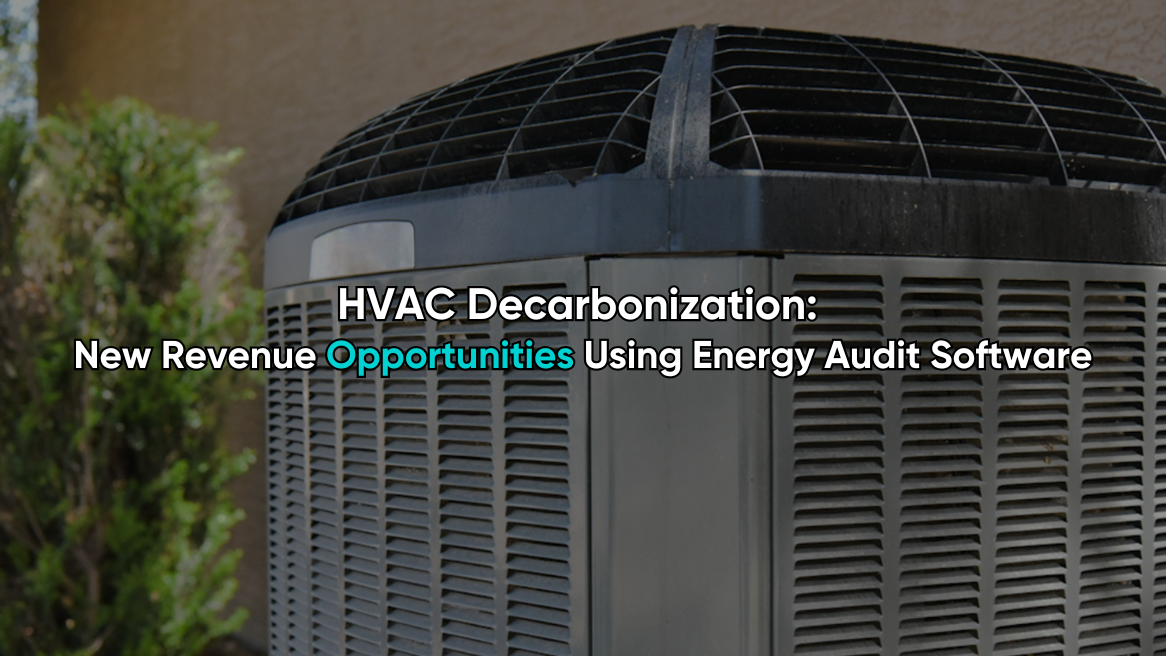
HVAC Decarbonization: New Revenue Opportunities Using Energy Audit Software
HVAC decarbonization has moved well past the sustainability conversation. For contractors paying attention, it’s becoming a real business opportunity, one that rewards professionals who can do more than swap out equipment.
Homeowners, building owners, utilities, and local governments are all under pressure to cut energy use and reduce emissions. That pressure creates demand. And the contractors who know how to assess a building, identify the right improvements, and explain the value in plain terms are the ones who will capture it.
That’s where energy audit software comes in. With the right tools, decarbonization stops being a vague goal and starts being a repeatable service: audit, report, recommend, quote, maintain, repeat. Contractors already using an HVAC load calculator are seeing how accurate sizing improves customer trust and system performance.
What HVAC Decarbonization Actually Means
In plain terms, HVAC decarbonization is about helping homes and buildings burn less fossil fuel and waste less energy. That could mean different things depending on the property:
Replacing an aging gas furnace with a high-efficiency heat pump. Tightening up a leaky building envelope. Right-sizing equipment based on actual load calculations rather than rule-of-thumb guesses is one of the most important steps in improving HVAC efficiency and avoiding oversized systems that waste energy and reduce comfort. . Upgrading ductwork that’s been bleeding conditioned air for years. Adding smart controls that give homeowners more visibility into what’s running and when. Or supporting full building electrification where that makes sense.
For HVAC professionals, the bigger shift is in the conversation itself. Instead of showing up and asking “what size unit do you need?”, you can ask better questions. Where is this building losing energy? Is the existing system oversized? Would a heat pump actually perform here? What should happen before new equipment even goes in? How do we help this customer lower their bills and feel comfortable year-round?
That’s a more useful conversation for the customer and a more profitable one for your business.
Why This Creates Real Opportunity for Contractors
New revenue beyond the equipment sale
Decarbonization opens up services that have nothing to do with which unit you’re installing. Home energy audits, heat load reports, electrification assessments, efficiency upgrade recommendations, comfort evaluations, maintenance plan pricing, these all represent billable work before, during, and after the equipment job.
Conversations that actually land
Most homeowners don’t know what SEER ratings mean and don’t particularly care. But they do care about high utility bills, rooms that never seem to reach the right temperature, and systems that break down at the worst possible time. Energy audit software helps you translate technical findings into plain-language reports, so when you recommend air sealing or duct repairs or insulation upgrades, the customer understands why.
More credibility with homeowners
There’s a meaningful difference between telling a homeowner they should upgrade their insulation and showing them, with data, exactly where their home is losing energy and what it’s costing them. One feels like a sales pitch. The other feels like advice. Contractors who lead with audits and reports tend to be seen as advisors, not just vendors.
A real entry point for heat pump and electrification work
Heat pump and electrification projects are growing. But they’re not simple equipment swaps. A home may need load calculations, duct evaluation, insulation improvements, or electrical panel upgrades before electrification makes sense. Without a proper assessment up front, you’re setting yourself up for problems. Energy audit software helps you identify those issues early, before they become mid-project surprises.
Recurring revenue through maintenance
An efficient system still needs maintenance. Once you’ve completed an audit or upgrade, there’s a natural opening to price out a maintenance agreement. It keeps the system running well, protects the customer’s investment, and keeps your business in the picture long after the initial job is done.
How to Use Energy Audit Software for Decarbonization Work
Step 1: Start with the building
Before you talk about equipment, gather information about the home or building. Square footage, insulation levels, windows and doors, air leakage, duct condition, existing equipment, utility usage history, and whatever comfort complaints the homeowner has been living with. Decarbonization starts with the building envelope, not the unit sitting outside.
Step 2: Run a proper heat load calculation
A heat load report tells you what the building actually needs, not what’s currently installed, and not what a rule-of-thumb estimate would suggest. Accurate residential load calculations help contractors avoid oversizing and improve long-term energy performance. This matters especially when you’re recommending heat pumps or high-efficiency systems. Oversized equipment short-cycles, wastes energy, creates humidity problems, and generates callbacks. Get the sizing right first.
EDS HVAC Load Calculation Software helps contractors produce accurate heat load reports quickly, so sizing conversations are grounded in real numbers.
Step 3: Complete a home energy audit
A home energy audit identifies where energy is being wasted and which improvements will make the biggest difference. Common findings include poor attic insulation, leaky ducts, air infiltration around windows and penetrations, aging equipment running well below rated efficiency, inadequate ventilation, and outdated controls, and HVAC airflow problems that reduce system efficiency.
Good audit software organizes those findings into a report that a homeowner can actually follow, not an engineering document they’ll set aside and never look at again.
Step 4: Prioritize recommendations
Not everything needs to happen at once. Rank improvements by impact, cost, and urgency. A typical roadmap might look like: air sealing and insulation first, then duct repairs, then proper equipment sizing, then a heat pump or hybrid system, then smart thermostat installation, then maintenance plan enrollment. That gives the customer a clear path forward instead of a list that feels overwhelming.
Step 5: Present findings as a business case
Connect technical recommendations to real outcomes the customer cares about. Lower energy bills. More consistent comfort. Fewer problem rooms. Better air quality. Equipment that lasts longer. A home that’s better positioned for whatever energy costs look like in five years. The goal isn’t to pressure anyone; it’s to give them enough information to make a confident decision.
Step 6: Include maintenance in every proposal
After the audit, don’t leave the maintenance conversation for later. Price it out and include it. EDS tools support maintenance plan pricing and help keep the customer relationship active after the initial project closes.
Common Obstacles and How to Work Through Them
Customers who don’t know what decarbonization means
Most don’t, and that’s fine. Lead with comfort, monthly bills, reliability, and equipment that’s ready for the future. You don’t need to win the environmental debate; you need to help the customer understand what’s in it for them.
Teams that focus only on the equipment
A high-efficiency system performs poorly in a leaky, underinsulated home. The box outside is only part of the answer. Use energy audit software to evaluate the full picture before making recommendations.
Reports that are too technical
A 40-page engineering report isn’t a deliverable; it’s a reason for the customer to stall. Keep reports clear, visual, and focused on what matters: what’s wrong, why it matters, and what to do about it. Prioritized recommendations beat exhaustive ones.
Projects that feel too expensive
Whole-home upgrades add up fast when presented all at once. Break the work into phases. Start with whatever delivers the most immediate value and build from there. A customer who completes phase one is far more likely to come back for phase two than one who walked away from sticker shock.
No repeatable process
When every audit is done differently, quality is inconsistent, and scaling is hard. Build a standard workflow for intake, inspection, reporting, recommendations, pricing, and follow-up. The right software makes that consistency much easier to maintain across technicians and sales teams.
Where AI Fits Into This
Modern energy audit software is doing more than organizing forms and generating PDFs. AI and automation are helping contractors capture field data faster, generate cleaner reports, identify efficiency opportunities that might otherwise get missed, compare upgrade scenarios, and streamline AI-powered HVAC calculations that improve consistency across projects.
The practical benefit is speed and consistency. A technician can collect information in the field, produce a professional report, and walk the customer through the next steps without a pile of manual paperwork waiting back at the office.
Over time, these tools can also give your business better visibility into which audit findings tend to lead to upgrades, which customers are most likely to act, and which services actually drive revenue. That kind of data is hard to develop without a consistent process behind it.
A Quick Reference for Building Out Your Decarbonization Service
A few habits worth building into every job:
Start major replacement conversations with a heat load calculation. Pair equipment recommendations with a building performance review. Use plain language comfort and cost, not just carbon. Show customers the practical benefits before the environmental ones. Phase recommendations by impact and urgency. Document findings with photos and field notes. Include a maintenance plan option in every audit report. Train technicians to explain what they found and why it matters. Use software to standardize reporting across the team. Follow up after the audit with a clear, specific next step.
Frequently Asked Questions
What does HVAC decarbonization actually mean in practice?
It means reducing the emissions tied to heating and cooling through energy efficiency upgrades, heat pumps, better insulation, duct improvements, and building electrification strategies. In practice, it looks like a more thorough, building-first approach to HVAC service.
Why should HVAC contractors care?
It creates new service lines. Audits, load calculations, efficiency recommendations, electrification assessments, and maintenance plans all represent revenue opportunities that go well beyond equipment replacement.
How does energy audit software help?
It helps you collect building data, identify energy waste, and create clear reports that customers can understand and act on. That makes it easier to justify recommendations and close more complete projects.
Are heat pumps always the right answer?
Not automatically. A heat pump can be a strong option in many situations, especially when supported by accurate heat pump load calculations and proper building performance analysis. The right solution still depends on the building, climate, insulation quality, duct condition, electrical capacity, and customer goals.
Can a smaller HVAC company offer decarbonization services?
Absolutely. You don’t need a large engineering department. With a repeatable process and the right software, a small or mid-sized contractor can add audits, reports, and maintenance plans without significantly expanding their team.
How EDS Helps Turn Decarbonization Into a Real Revenue Stream
The opportunity in HVAC decarbonization isn’t just about selling more efficient equipment. It’s about helping customers understand their homes, make smarter decisions, and stay comfortable year after year while building a business model that doesn’t live and die by the next equipment replacement job.
Energy Design Systems (EDS) gives HVAC contractors the tools to make that practical. EDS HVAC Load Calculation Software produces accurate heat load reports that support better sizing decisions and equipment recommendations. EDS HVAC Home Auditor helps teams generate professional energy reports that make efficiency upgrades easier to explain and easier to sell. And EDS tools support maintenance plan pricing, so contractors can build long-term customer revenue after the initial job is done.
If your business is ready to move toward more consultative, data-backed service, EDS provides the workflow to help you audit, report, recommend, and grow.
Related posts
-
![HVAC Software and Solutions for Small Businesses]()
HVAC Software and Solutions for Small Businesses
When you invest in a new HVAC system for your home or for your business, you may come across the term “load calculation”. You might be wondering what it means, right? Well, the heating and cooling load calculation is the first step of the iterative HVAC design procedure. It is something that ensures comfortable heating,…
-
![Find the Right HVAC Software]()
7 Critical Checkpoints To Find the Right HVAC Software
If you are one of those businesses that have finally decided to use HVAC software, it might be challenging to find the right one. Today, there are plenty of options available in the market and more research even makes it more difficult to make the decision. Selecting the right HVAC load calculator or HVAC home…

